What it is
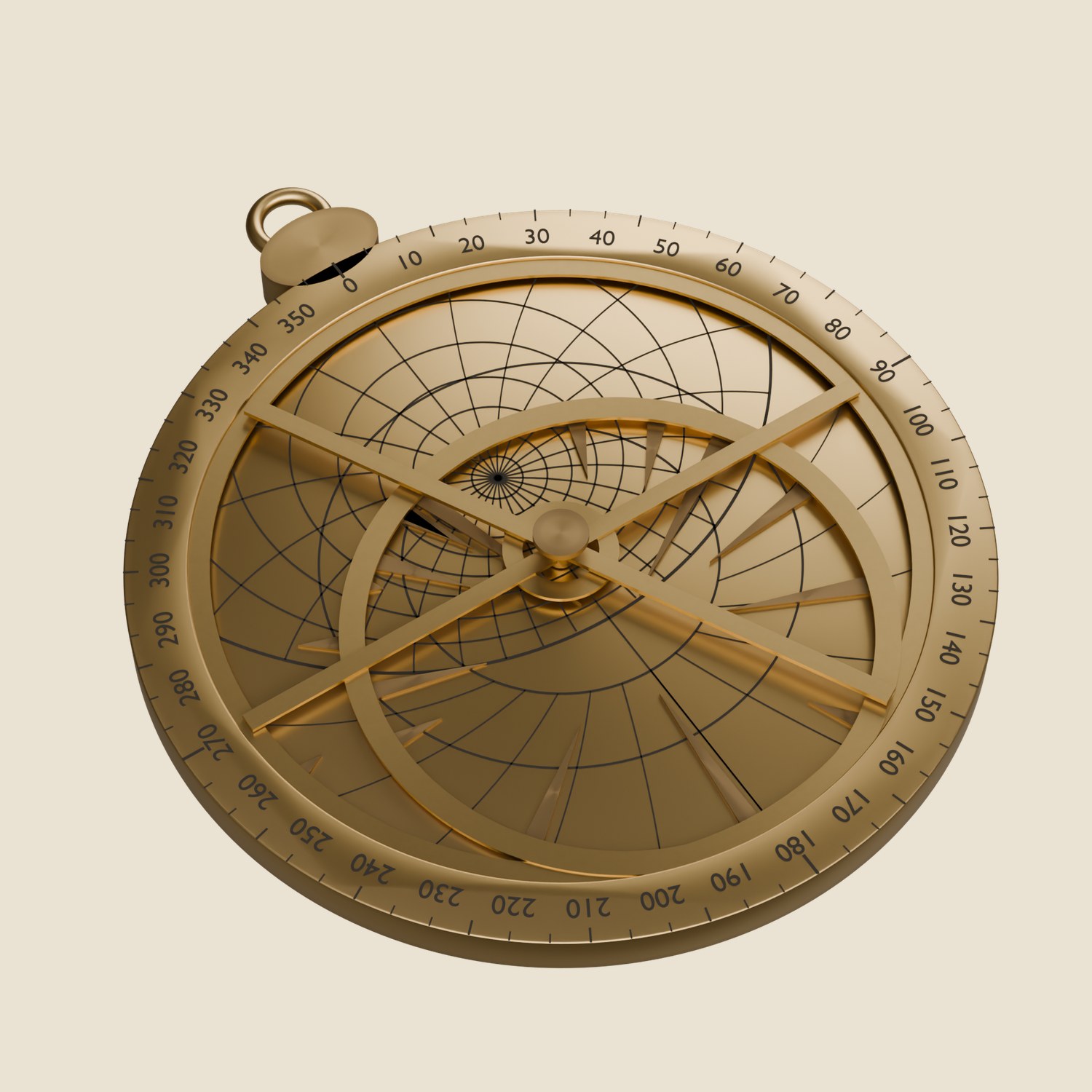
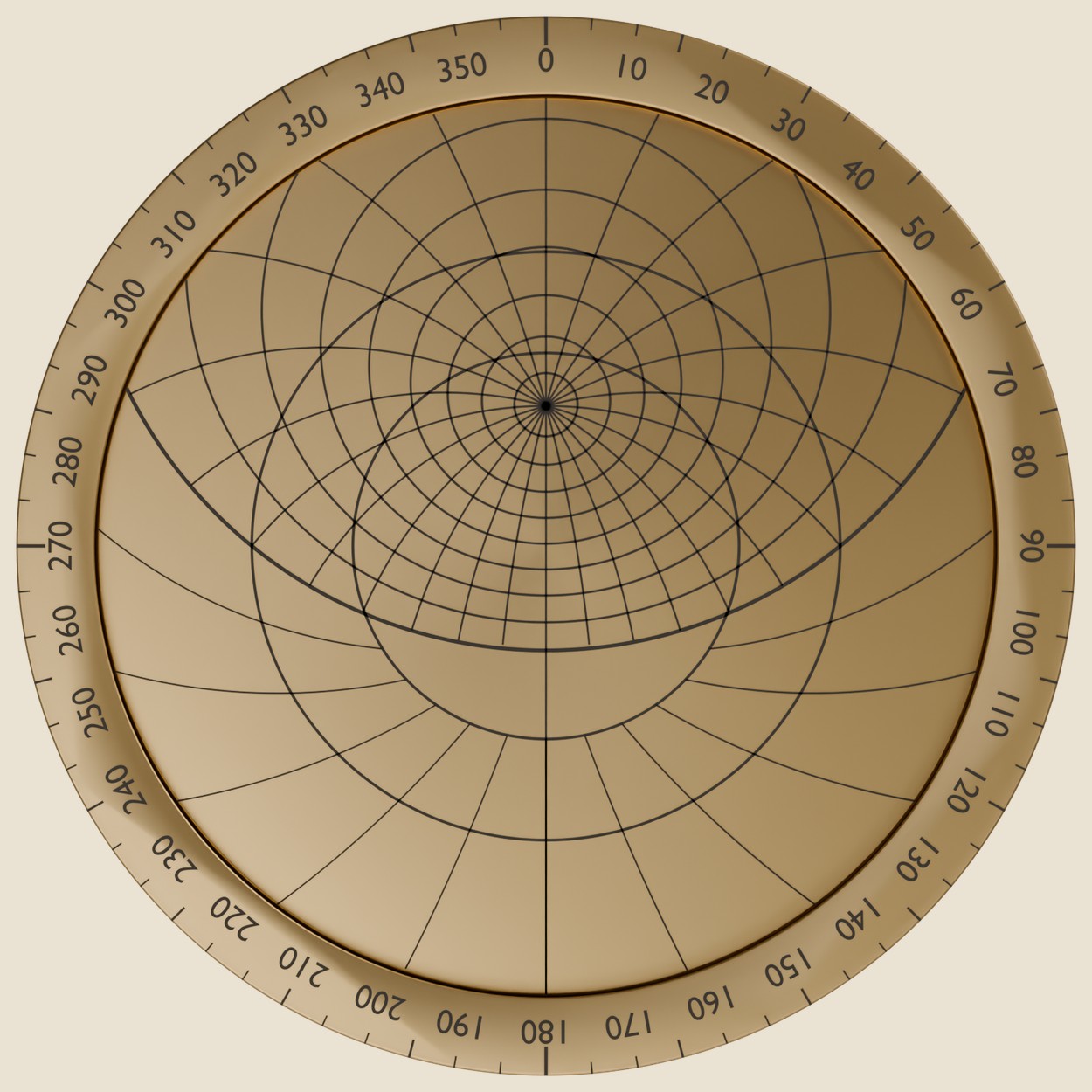
Two discs on a pin. The lower one is engraved with your horizon: the curves of equal altitude stacked around your zenith, the arcs of compass bearing, the line of the horizon itself. It is cut for one latitude and it is useless at any other.
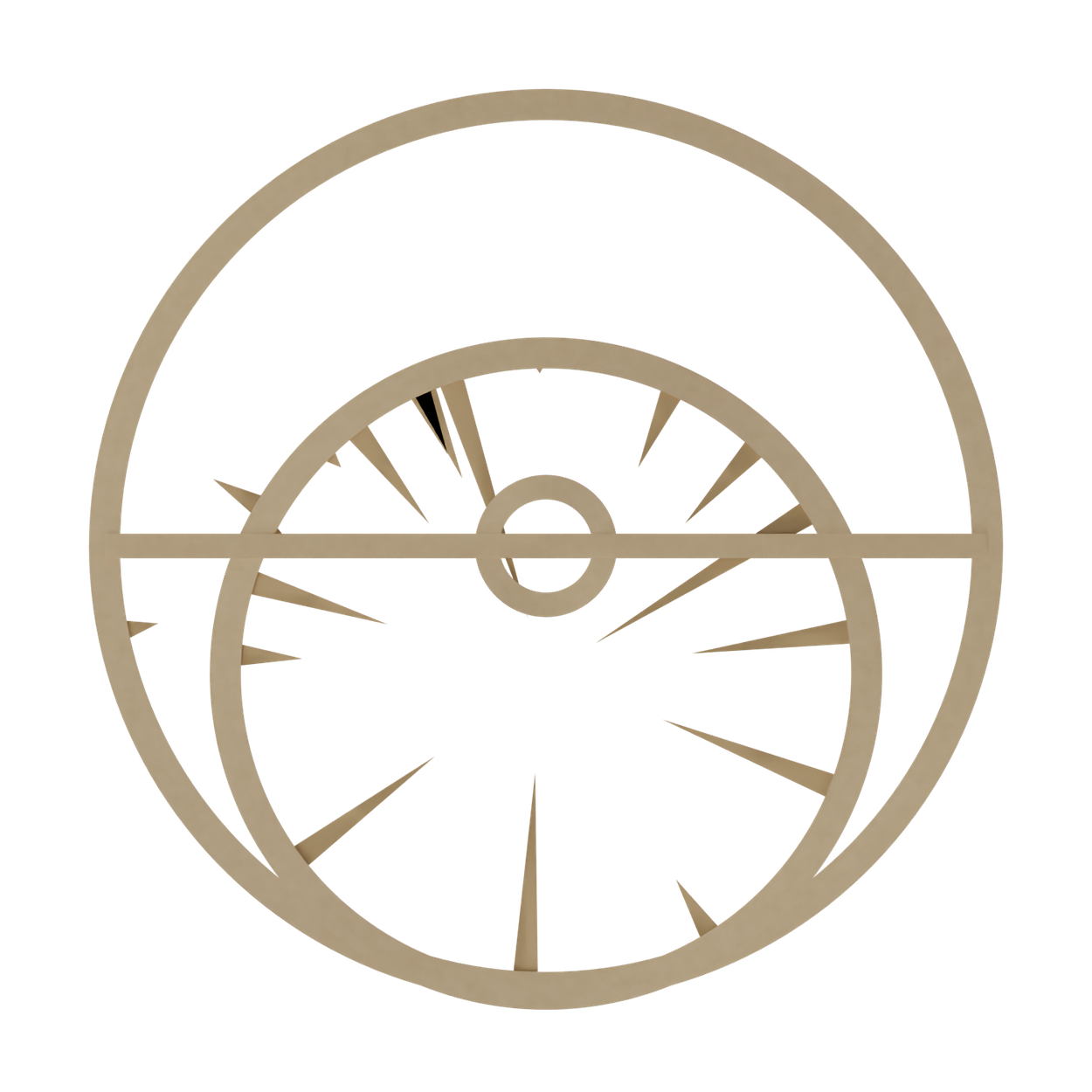
The upper one is the sky. It is pierced away to almost nothing so you can see through it, and the spikes left behind are stars, each one filed to a point that sits at that star's real position. The lopsided ring is the path of the sun through the year.
Turn the sky over the horizon until it matches the moment you are standing in, and the instrument will tell you the time, how high the sun is, when it will set, which star you are looking at, and how tall that tower across the field is. For most of a thousand years it was the most sophisticated object an educated person could own.
Set it to a moment
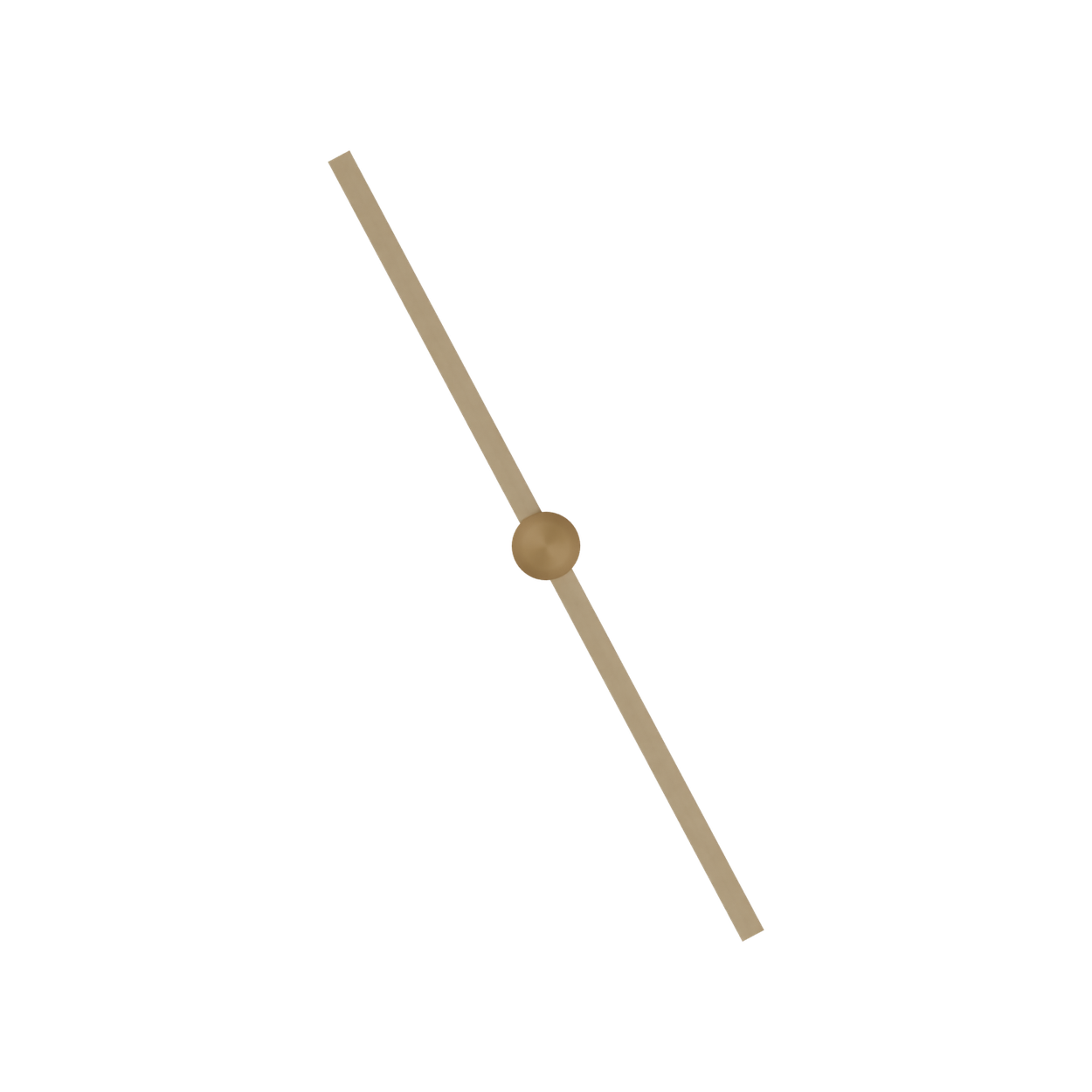
The rete turns by the sidereal time and the rule follows the sun. Everything below is computed from the date, then read back off the geometry that was cut into the brass.
- Sun altitude
- —
- Sun azimuth
- —
- Declination
- —
- Hour angle
- —
- Sidereal time
- —
- Sunrise
- —
- Sunset
- —
- Daylight
- —
The projection
Stand at the south celestial pole and shine a light through the sphere onto the plane of the equator. A point at declination d lands at
r = tan(45° − d/2)
and that is the entire instrument. The equator lands on a circle of radius one. The north pole, directly overhead the projection, collapses to the single point at the centre. The Tropic of Cancer falls inside the equator, the Tropic of Capricorn outside it, and because the sun never goes further south than Capricorn, that circle is where the plate stops. The rim of every astrolabe in the world is the winter solstice.
Two properties make it work rather than merely look interesting. Circles stay circles, so a maker can strike every line with a compass instead of plotting it point by point. And angles are preserved exactly, so the bearing between two things on the plate is the bearing between them in the sky.

The plate
Cut for one latitude and one only. Carry it three hundred miles north and it becomes decorative.
- Almucantar
- A circle of equal altitude. The word arrived in English from Arabic, through Chaucer, and never left.
- Azimuth
- An arc of equal bearing. All of them pass through the zenith and the nadir, which is what makes them constructible.
- The horizon
- The almucantar of zero. It crosses the equator at exactly due east and due west, on every plate, at every latitude.
- Unequal hours
- Twelve divisions of the night, so an hour in December is shorter than an hour in June. Clocks made this idea obsolete, and the lines outlived it.
The rete
The star map is cut away until barely anything is left, because you have to see the plate through it. What survives is a frame, the ring of the ecliptic, and a spike for each star, filed to a point that lands exactly where that star sits.
There are twenty on this one, placed from J2000 right ascension and declination: Sirius, Rigel, Procyon, Betelgeuse, Aldebaran, Capella, Pollux, Regulus, Spica, Arcturus, Vega, Altair, Deneb, Alphecca, Alpheratz, Algol, Mirfak, Alkaid, Dubhe, Denebola.
Anything further south than the Tropic of Capricorn falls off the edge of the plate and cannot be carried at all. That is why there is no Canopus and no Fomalhaut here. The instrument has a horizon in both senses.
The other side is a calculator
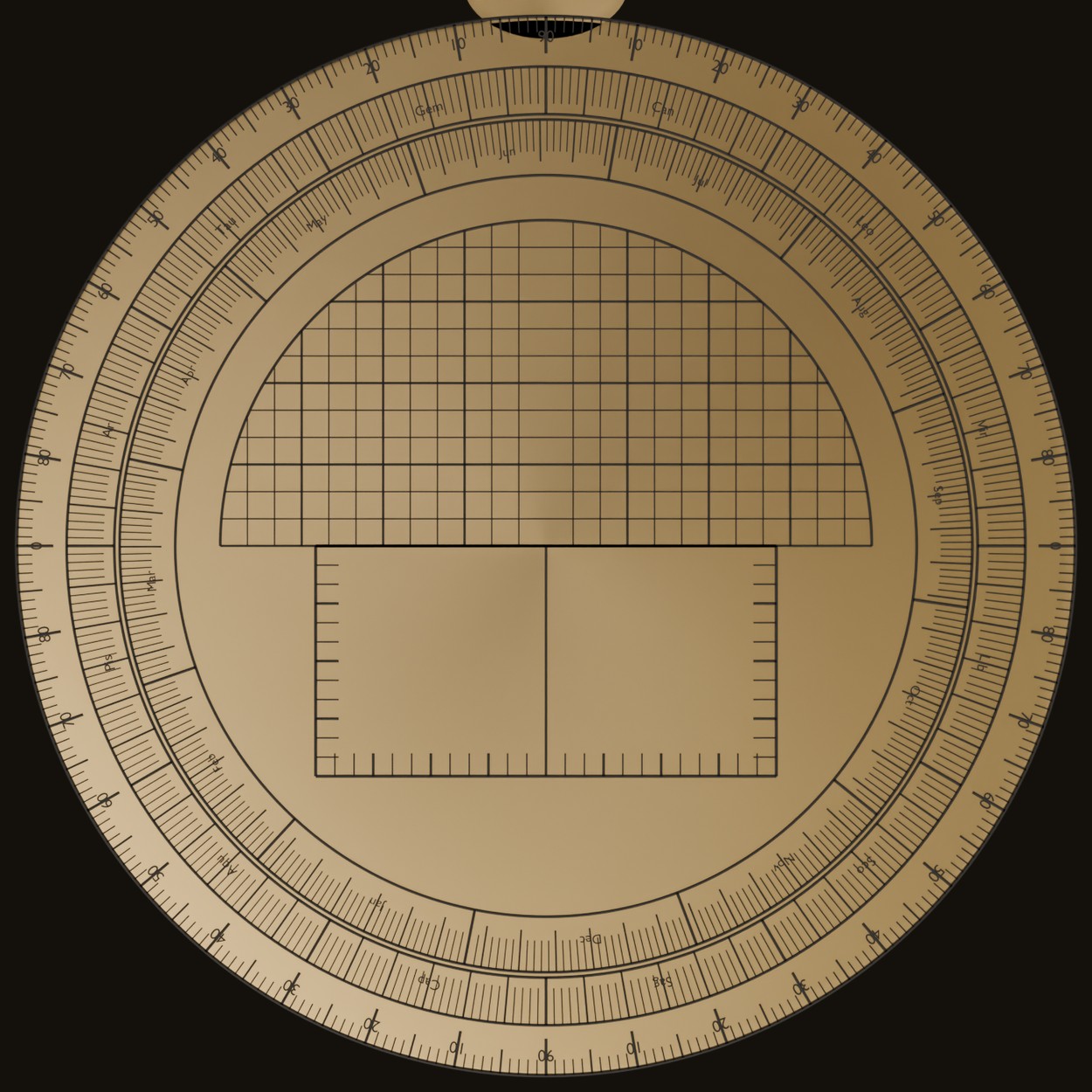
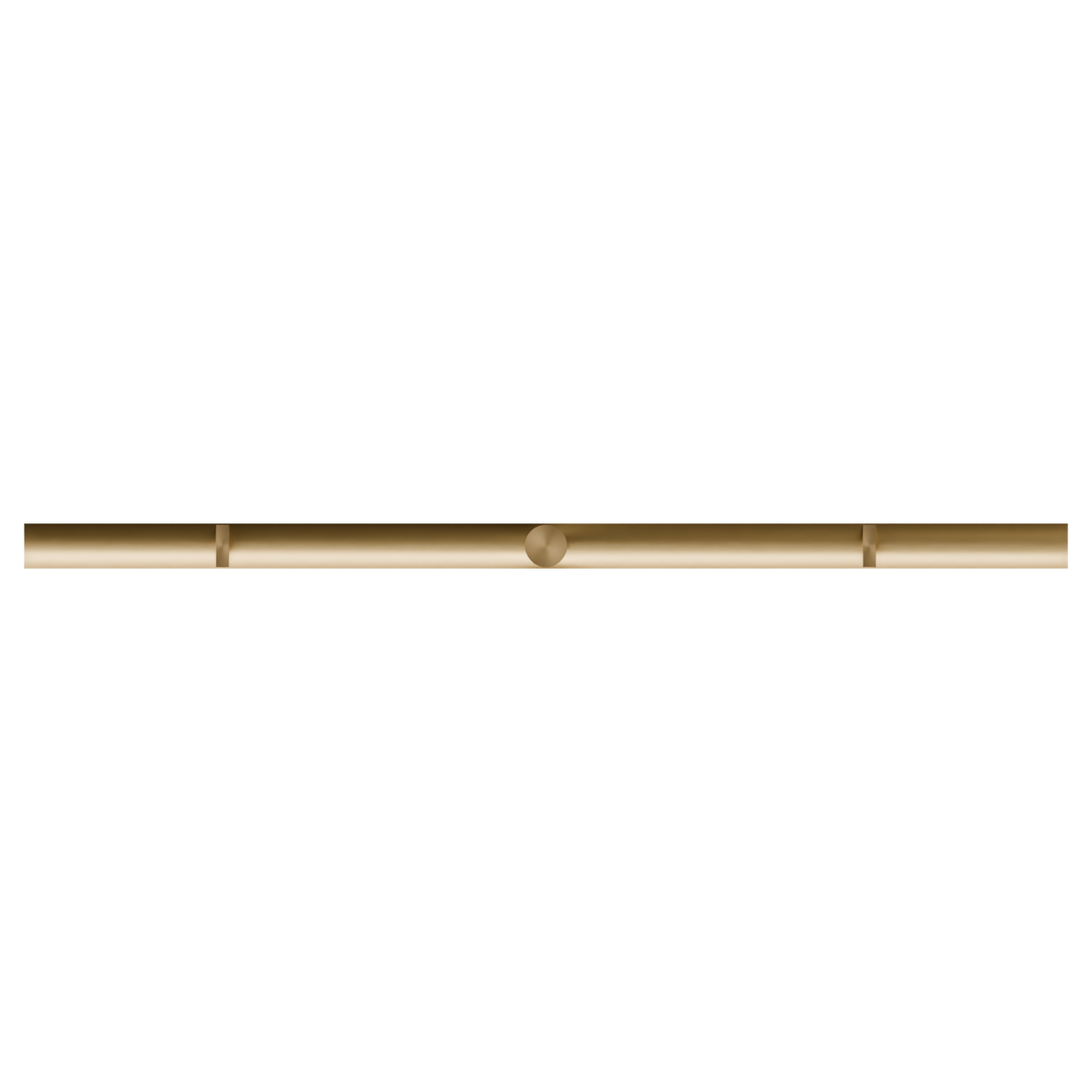
Turn it over and the sky is gone. What is left is an almanac, a table of tangents, and a bar you sight along.
- Reads on
- —
- Division
- —
- That is a ratio of
- —
- So the tower stands
- —
What the back is for
- Degrees
- The outer scale, zero at each end of the horizontal and ninety at the top. Hang the instrument from your thumb, tip the bar until the sun falls through both pinholes, and read the altitude off it.
- Zodiac
- Twelve signs of exactly thirty degrees each. This is ecliptic longitude, not astrology: it is the coordinate the sun's position is measured in.
- Calendar
- Every day of the year, set against the longitude the sun actually has on that day. The day marks are not evenly spaced, and that is not an error.
- Sine grid
- Twelve by twelve across the upper half. Sines and cosines, read off by eye, four centuries before a printed table was cheap.
- Shadow square
- A table of tangents cut in metal. Sight the top of a tower, see where the bar crosses the square, and the division you land on is the height of the tower as a fraction of your distance from it.
The calendar ring is the part worth stopping on. The sun does not move at a constant rate along the ecliptic, because the earth's orbit is an ellipse and we are nearest the sun in early January. So the days crowd together on one side of the ring and spread out on the other. On this one the sun covers 1.0193 degrees on the fourth of January and only 0.9534 on the fifth of July, and the ring was drawn by computing the sun's position on all three hundred and sixty five days and putting a mark at each.
Count those daily steps around the whole ring and they fall short of the circle, by very close to a quarter of a day's motion. That shortfall is why February occasionally has an extra day in it.
Lewis
In 1391 Geoffrey Chaucer wrote a manual for using one of these. He wrote it for his ten year old son Lewis, in English rather than Latin, because the boy did not have enough Latin yet, and he apologised in the opening for his plain style and for saying things twice.
It is among the earliest technical manuals written in English, and it is still the clearest introduction to the instrument in the language. He calls the plate the rete's floor and tells Lewis not to be frightened of the numbers.